

Quick notes to help you find new business in less time with less effort. . . sometime next week.
In this issue:
- Thoughts on Hiring Salespeople
- Being Human
- Random Stuff
- Back In The Day
Thoughts on Hiring Salespeople (or anyone)
- A feature of hiring is describing a rosy picture of the future. Everyone involved wants the best outcome, so it makes sense that's what we talk about. As you describe the best case scenario, spend a minute talking about the worst case. Don't be a downer, but do be realistic. What will you see, hear, feel, or sense that will lead you to think, "we made a mistake." Talk about it.
- An algorithm is a process or a set of rules to follow. We think of algorithm = computer, but it can apply to a human high touch activities like hiring too.
Using the exact same set of questions for each candidate works well because we are excellent at picking out patterns. However, most humans struggle with repetition. The algorithm helps overcome that deficit. - Hiring algorithms work best when our team is looking for behaviors the position needs for success. Like "persistence despite setbacks" or "accuracy under pressure." Sticking to an algorithmic process gives you good insights into the behaviors the candidate needs to succeed.
- When hiring a salesperson who brings a large contact list and promises fast results, do this: First, take their pipeline times our close rate guess, then halve it. Take our ramp up time expectations and double them. Then halve the revenue and double the ramp up time again. Do we still want them? Of course we do. We want the shortcut. My quick math will be closer to our actual result.
Being Human – Revisiting decision porn
Us? We just need to learn to make better decisions.
As we have entered into an abbreviated wedding planning period, I'm struck by how many decisions need to be made. I'm entertained at how quickly we move from rigorous analysis to simply justifying anything. It reminded me of this Being Human thought from 2017.
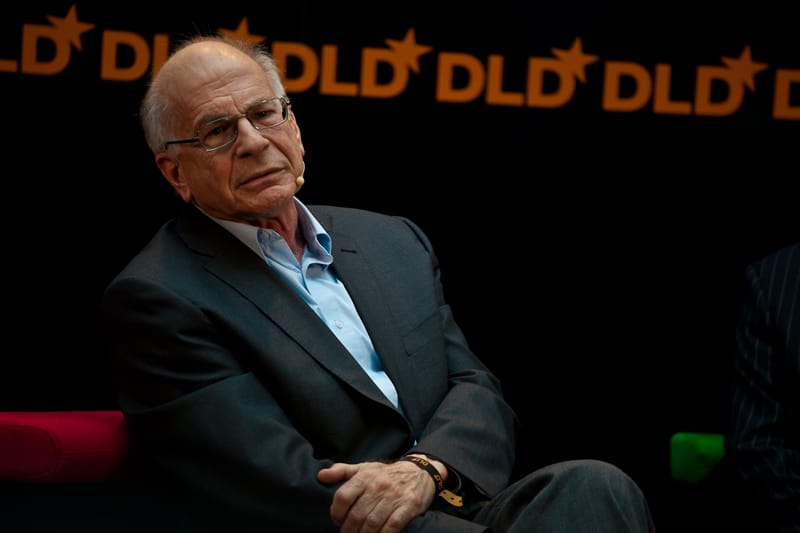
One of my favorite books is Thinking Fast and Slow by Daniel Kahneman. He is an Israeli-American psychologist renowned for his work on judgment and decision-making. He applied his findings to behavioral economics and was awarded the 2002 Nobel Memorial Prize in Economic Sciences.
One exposed to his papers and thinking, I started reading everything I could get my hands on and watched whatever I could find on YouTube. It turns out I wasn't the only one. There is a cottage industry that has sprung up around decision making, what I've come to refer to as decision porn.
I made note cards, practiced my logical fallacies, and waded around until I found a MOOC (Massive Open Online Course) that featured Kahneman. When interviewed in the course on improving decision making, Kahneman looked amused and the interviewer/instructor picked up on it asking, "Do you see a problem with wanting to improve decision making?"
Kahneman didn't miss a beat. "I don't think you can improve decision making."
Since then, I've loosened my grip on trying to improve decision making, but still read about Kahneman. He cracks me up with his low key demeanor and incisive statements. Reading Michael Lewis' book on Kahneman and Taversky, The Undoing Project, one passage stands out.
Danny and Lanir then presented their probabilities to Israel’s Foreign Ministry. (“The National Gamble,” they called their report.) Foreign Minister Allon looked at the numbers and said, “Ten percent increase? That is a small difference.”
Danny was stunned: if a 10 percent increase in the chances of full-scale war with Syria wasn’t enough to interest Allon in Kissinger’s peace process, how much would it take to turn his head? That number represented the best estimate of the odds. Apparently, the foreign minister didn’t want to rely on the best estimates. He preferred his own internal probability calculator: his gut. “That was the moment I gave up on decision analysis,” said Danny. “No one ever made a decision because of a number. They need a story.”
“That was the moment I gave up on decision analysis. . ." strong stuff from the late Dr. Daniel Kahneman.
Random Stuff
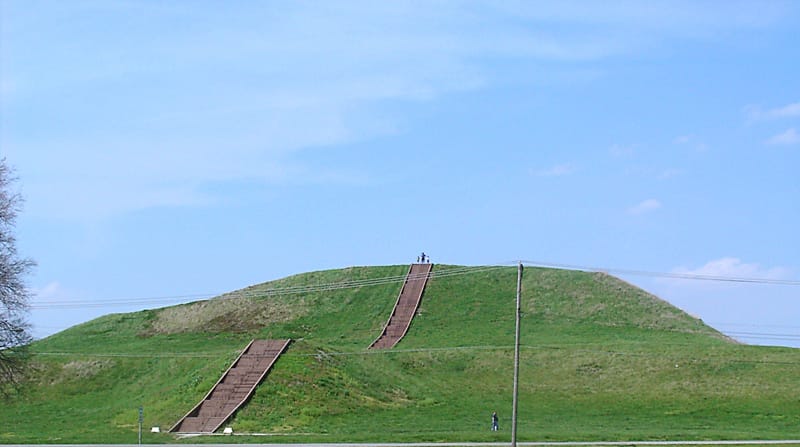
Years ago we were visiting children in St. Louis, MO. From there, we were heading up to Wisconsin and my lovely bride suggested we stop at the Cahokia National Monument just outside the city. It's the largest pre-Colomnian civilization site in the USA. At its peak, around 1100, Cahokia hosted a population of an estimated 20,000 people. Larger than London back then.
Many of the findings from any archeological site like this come from the trash pits. Animal bones suggest what they ate, pottery shards how they cooked, flint arrowheads how they hunted, and other refuse give hints to daily life.
I'm in the midst of cleaning the garage. Part of me wants to make a big hole in the backyard and toss everything in for future generations to consider.
It seems far faster and easier than deciding what to keep, what to toss, and what to donate. I'm at the point where my lovely bride caught me muttering, "I swear on my mother's grave I will never buy another thing again."
"Your mom's still alive," she said.
Which reminds me, I need to call her. Mother's Day is coming up.
Back in the Day
What I was thinking about last year, five years ago, and ten years ago.
- Last Year: Right FIT #487 – I revisited one of my go-to process visuals for finding more customers. It works best for starting discussions about where to focus efforts, but its real value to me was in learning how powerful graphics like this are for discussions. A quick playing field does wonders for making meetings productive.
- Five Years Ago: Right FIT #278 – Some solid marketing advice in hiring outsiders to help you with positioning. Not just because they are more talented than you, but because they don't know as much as you. They'll make your product and services smaller and thereby easier for the market to understand.
- Ten Years Ago: Right FIT #16 – I haven't thought about Zig Ziglar's rump roast story in a long time. It's a fun way to demonstrate the value of digging into why we do the thing we do. I heard a speaker recently and she was talking about her new book on multi-level marketing. Zig is mentioned, as is Brian Tracy, early sales training heroes. I'm not sure I'll look at them the same, but I need to read the book first. I'm probably missing something important.


