

Greg's Right FIT #563–This week: Patience, Questions, Baseball
Quick notes to help you find new business in less time with less effort. . . sometime next week.
In this issue:
- Thoughts about Patience
- Being Human
- Random Stuff
- Back In The Day
Thoughts about Patience
- Be patient. As I've relayed, a life well lived doesn't need bolts of luck. Little edges gained every day do the trick too.
- We can make the law of large numbers work for us if we're patient. In a similar way, we can use the law of small numbers too. Assume our short run results will not predict the future, so be patient and wait for more results.
- Building a market for a new product is a challenge. It requires a lot of pivots and backtracking. For this reason, we need the right people in this role from the start. Hire for successful new market behaviors like curiosity and patience.
- Always be closing, but be patient with results. Developing new clients relies on a number of events and decisions taking place. Believe in asking for the sale, but couple it with patience.
Being Human – Understanding
“Never miss a good chance to shut up.” – Will Rogers
Breaking down a sales calls often comes down to critiquing questions. When we ask better questions, we get better information, understand more, and get closer to our goal of finding the exact right solution for clients. This week a rep asked for details. "Greg, how do I ask better questions?"
Yes! (most of the time reps just nod at me and say, uh-huh)
I broke out some old notes. I did some management training way back when that used material from Precision Questioning by Dennis Matthies. He split questions into seven categories and gave examples.
These are from my notes:
- Action: What should we do? When will it be done? Is this a commitment? Will this get to the root of the problem? Who should we collaborate with?
- Proceeding: What is our agenda? What are the goals? Is this urgent? Should we be having this discussion? Who else should be in this discussion?
- Clarifying: What do you mean? Where? When? What parts, exactly? Why is it called this? How confident are we? Compared to what?
- Assumptions: What are the assumptions? Is there only one? Is there a qualitative way to judge? Where do our background assumptions differ?
- Qualifying: How do you know this? Is this person credible? Who has the data? Is it knowable? How certain are we? Where did we hear this?
- Causes: What caused this? To what extent is this external vs internal? Was there an immediate trigger? Are there contributing causes? Is this random?
- Effects: What are the consequences? What's the most likely cause? Short-term effects? Long-term effects? Is this a prediction or statistical inference?
Getting to know these categories is a good way to get better. Putting new questions to use in actual conversations is a better way to get better. Doing post-call analysis with a mentor and coming up with a half-dozen questions we could have asked is the best way to get better. It works. Swear.
Good stuff.
Random Stuff
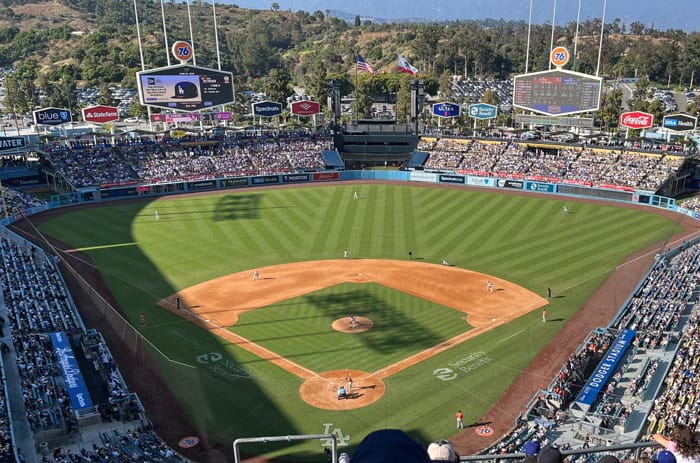
It's Major League Baseball playoff baseball time.
My baseball high point was in my early teens. In eighth grade we played in a high school league for high schoolers. We were the Ore Diggers. (The name had something to do with our coach who made a fortune in mining, but that story is lost to time.)
I'm thinking about it because TV coverage of pros includes a little graphic that shows how fast the pitcher is throwing. They are routinely throwing the ball in the 90s. Sometimes the low 100s. The first time I faced a pitcher throwing in the 90s was that year with the Ore Diggers. A boy who went to our grade school but was three years older than us threw that hard. Our coach worked with him and for one practice brought him in to pitch to us. It was spring ball in Denver, so it was windy and cold. We played on George Washington's high school field, which felt very grown up. He seemed so much older and more mature. A man versus boys.
It's hard to stand in the batters box while someone throws 90 mile per hour fastballs two to four feet from your head. I remember not being able to swing. The ball was by me before I could react. The sound was horrific. FsssSSSZZ POP! Strike three! Sit down. I was happy not to get beaned.
The coach was trying to help us, show us another level we could aspire to, but all it did was teach me I wasn't going to be a pro baller. One of my teammates made contact. A foul ball. We all cheered. He was the only one. I'm sure the coach was disgusted, but it wasn't fun. That guy was going pro. We weren't.
As expected, he was drafted out of high school and three years later, when I was in eleventh grade myself, he was at our practice. He was in either single or double A pro ball. Still two jumps away from the Majors. I asked what it was like. "It's baseball," he said, sounding dejected. "The biggest difference is here there might be one guy that can take you yard, but there one through nine can jack it." I could hear in his voice he wasn't going to make it. He looked and sounded to me the way I felt that cold day three years earlier.
Reality sucks sometimes. Then you get over it. Life goes on.
Major Leaguers are freaks.
Back in the Day
What I was thinking about last year, five years ago, and ten years ago.
- Last Year: Right FIT #511 – One thing about momentum is it's not enough to just tell someone to build momentum. We need to make it easy for them to do. We need to clear the path, so to speak. It won't guarantee momentum gets built, but it will help keep them in motion.
- Five Years Ago: Right FIT #302 – Videos. I try them every once in a while but they're rough. Not enough "smash that like button" or something.
- Ten Years Ago: Right FIT #40 – Last night I watched a football game. My beloved Broncos jumped out to an 11 point halftime lead and then failed to move the ball at all in the second half. They ended up winning, but it didn't feel good. Re-reading this from 10 years ago, you'd think a loss would make the day after worse, but in this case I'm not so sure. I feel bad they won.


