


Quick notes to help you find new business in less time with less effort. . . sometime next week.
In this issue:
- Questions about Today's Buyers
- Being Human
- Random Stuff
- Back In The Day
Questions about Today's Buyers
- How much logic goes into your buying process? How about your prospect's buying process? I listened to a friend detail using ChatGPT to help him make a $300 consumer purchase and it reminded me of a corporate RFP process. Are your sellers ready?
- In the 2000's, Marketing Qualified Leads (MQLs) and Sales Qualified Leads (SQLs) were an attempt to describe the customer's buying process as they used the internet for help making decisions. Using tracking tools we can see who consumes what info and get clues for lead generation. Are bots going to be just as visible in our lead systems?
- Most buyers, whether individuals or committees, don't purchase your goods and services more than once or twice in a career. Great salespeople know this and guide the buying process accordingly. They get in early and help clients find the exact right solution. Can a bot do the same?
- In many instances, the last salesperson in the room gets the sale. This may be because they helped design the process, or maybe the buyers just get tired and want to make a decision. Either way, how do your sellers compete with a bot's recommended process? Or deal with a bot that never gets tired of its process?
Being Human – Self-help book publishing
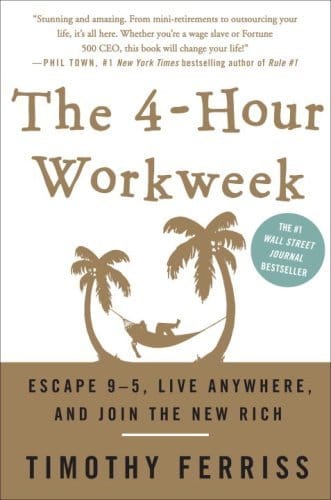
Tim Farris, the guy who wrote the 4–Hour Workweek, had an interesting article: Has AI Already Killed How-To Nonfiction?
On some level, The 4-Hour Body is a lookup table. I have described a lot of my books as Choose Your Own Adventure-style menus: How do I lose fat? How do I fix my sleep? How do I quickly add 10 pounds of muscle? Similarly, The 4-Hour Workweek is a decision tree for designing your lifestyle and automating your income.
In 2019, the best interface to those answers was a book.
In 2026, millions believe that the best interface is a free chatbot that has read my books—and thousands of others—that will give you a personalized protocol in 15 seconds, adjusted for your bodyweight, your schedule, your injuries, and your aversion to cottage cheese.
I haven't sold tens of millions of books, so my book sales haven't seen a 40% drop coinciding with the rise of AI chatbots, but I do notice more people I interact with referencing Claude or ChatGPT summaries on topics. And one guy had a bot summarize my books for him before we met, so I'm okay with the idea that self-help books may be the first to lose sales.
Self-help books, like 4-Hour Workweek or business biographies, are great for ideas. They aren't great for getting things done. Reading and thinking about working four hours a week is one thing, but making it happen is quite another. Some of us have the self-motivation to make it happen, but generally, to get things done we need a coach, mentor, or teacher.
But Greg, you say, they say the chatbots do coaching, mentoring, and teaching. In case you haven't heard, they help us get better at everything.
Maybe. If we're sufficiently self-motivated the chatbot can take credit. I'll go out on a limb and say if we're not sufficiently self-motivated the chatbot won't help anymore than that self-help book did. It just feels like it. Real behavior change comes from inside, where our self-interest hides. Tim may not sell more books, but they were just a delivery mechanism. I'll bet he and the other non-fiction self-helpers shift to selling ideas via other vehicles soon, if they aren't already.
Random Stuff
I'm thinking about worms.
When I dig through the garden it's exciting to see them. The robins seem to know what's up because one or two of them will watch me dig around. Not just on occasion, every time. One was on the fence watching me weed this morning. Clever little creatures.
It doesn't seem like birds are all that interested in the neighbor's tree branch covered in what I think are mimosa webworms. I can see them wriggling inside their web, getting fat off the branch closest to my new pumpkin vine. Bright yellow flowers already mean there will be at least one big ol' pumpkin this fall.
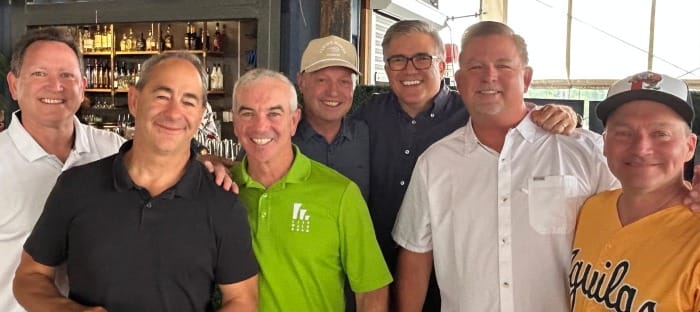
This last weekend I met up with a group of guys I've known since grade school. One of them, since pre-kindergarten. Four years old. We don't get to visit often, which puts pressure on answers to questions like, what's new? It's been years since we've sat together. We see each other on social media sometimes. Where to start?
One friend's answer is amazing to me. He has been dedicating a lot of time over the past couple of decades to the martial arts. He's a third-degree black belt in karate and skilled in using weapons. He asked what I did with my free time and all I could think to say was gardening.
It's almost the same thing.
I can wield a hori-hori knife and secateur with some skill. But I haven't had much coaching. Tutelage under a master gardener would be good. I might have pursued that if they offered achievement belts, but for now I'll wallow in my amateur status.
For now I can live with the occasional bird appreciating my soil toil.
Back in the Day
What I was thinking about last year, five years ago, and ten years ago.
- Last Year: Right FIT #495 – The testing mindset sticks out among the stories in this edition. Finding ways to test assumptions is a superpower of sorts. Like most things it can be taken too far, but used with enthusiasm will save us a lot of time in the long run. Test it.
- Five Years Ago: Right FIT #286 – A great quote from a reader, Peter Massey, "Nobody sets out to fail - even if it seems that way, in the failure there's probably a win in the eyes of the one who failed. . ." He is thinking of applying an acting methodology to sales and selling, and he is on to something. I'm happy to see this again because I wanted to explore it further too!
- Ten Years Ago: Right FIT #24 – A second edition of my Amalgamate booklet series came out. I had big plans for that series and stuck with it for 5 editions. I should probably revisit it. The creating/publishing/mailing process was labor intensive making it easy to procrastinate. Today, a decade on, I am thinking about a physical newsletter format. Something more human and tactile. I'll keep you posted.


